
Plastic Pallets and Crates for Australian Manufacturing
Closed-loop handling for component supply, work in progress and finished goods. Consistent dimensions every unit, published load ratings, and bins sized for line-side work rather than deep storage.
5,000 kg
Max Static Load
ISPM 15
Export Exempt
5
Warehouses
Stocked for Manufacturing
Rackable Pallets
8 lines
Parts & Tote Crates
3 lines
Bulk Storage Crates
6 lines
Export Pallets
7 lines
Foldable Bulk Crates
1 line
Handling That Behaves the Same Way Every Cycle
Manufacturing punishes inconsistency. A pallet that is 10 mm out, a crate that has swollen in a wet bay, a deck that has started to sag after a season in racking — each one becomes a jam on an automated line or a manual correction that someone repeats a hundred times a shift. Plastic is moulded to a repeatable dimension and holds it, which is why plants running conveyors, wrappers and automated storage move off timber first.
Swan Material Supplies holds fourteen pallet lines and eleven crate lines across five Australian warehouses, with static, dynamic and racking ratings published on every one. For closed-loop component supply between plants and suppliers, that consistency is worth more than headline capacity.
Line-Side, Not Just Storage
Bulk bins are usually specified on volume alone, which is how plants end up with 780 mm-deep containers that people have to lean into all shift. Where operators fill or empty a bin by hand, wall height is an ergonomics decision before it is a capacity decision. The shallow and medium-depth bins in the range exist for exactly that: a 440 mm wall is roughly mid-thigh and workable for a full shift, where a deep bin is not.
Choosing Between the Bin Depths
The 353L bin is the shallowest at 440 mm and the easiest to work by hand, making it the right choice for sorting, grading, inspection and hand-pack stations where people reach into the container continuously. The 528L sits at 580 mm, keeping the base within comfortable reach while recovering capacity. Both share a 5,000 kg static rating, the highest of any crate in the range, which suits dense material in block-stacked floor storage.
Both carry low dynamic and racking figures — 200 kg and 300 kg respectively — and that is the constraint to check before specifying. They are built to sit and hold weight, not to be carried loaded on forks or stored at height. Where bins move loaded or go into racking, the 600L rigid bulk crate at 1,000 kg dynamic and 800 kg beam racking is the correct choice.
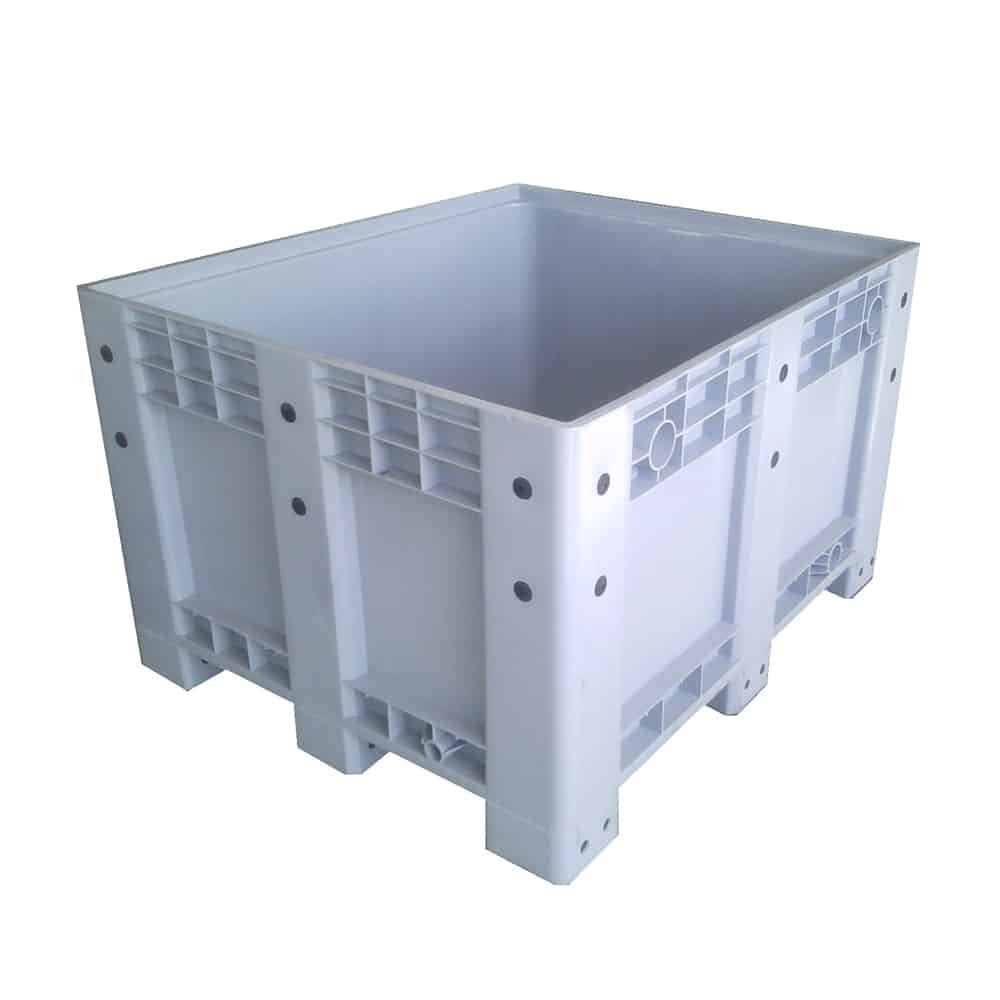
Rigid Bulk Crate 600L
Volume: 600 L
Dynamic: 1,000 kg
Beam racking: 800 kg
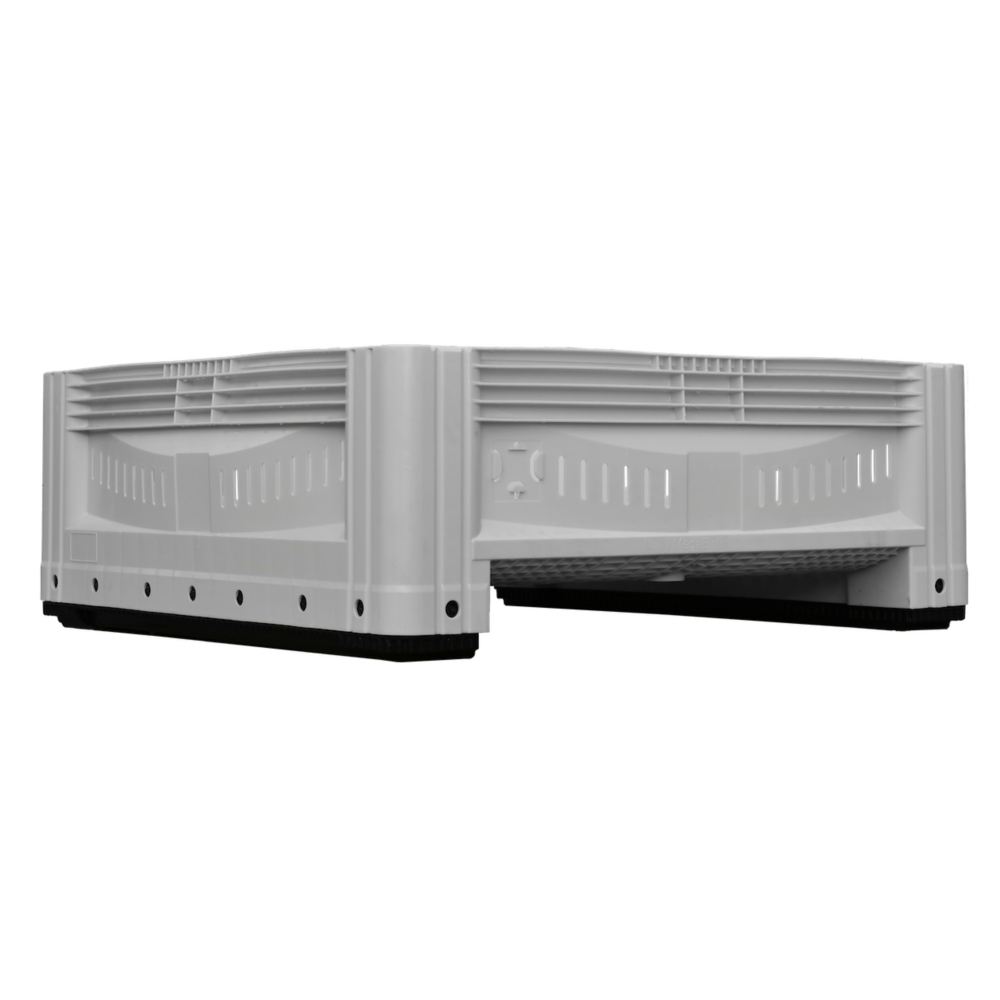
Rigid Bulk Bin 353L
Depth: 440 mm
Static: 5,000 kg
Weight: 27.5 kg
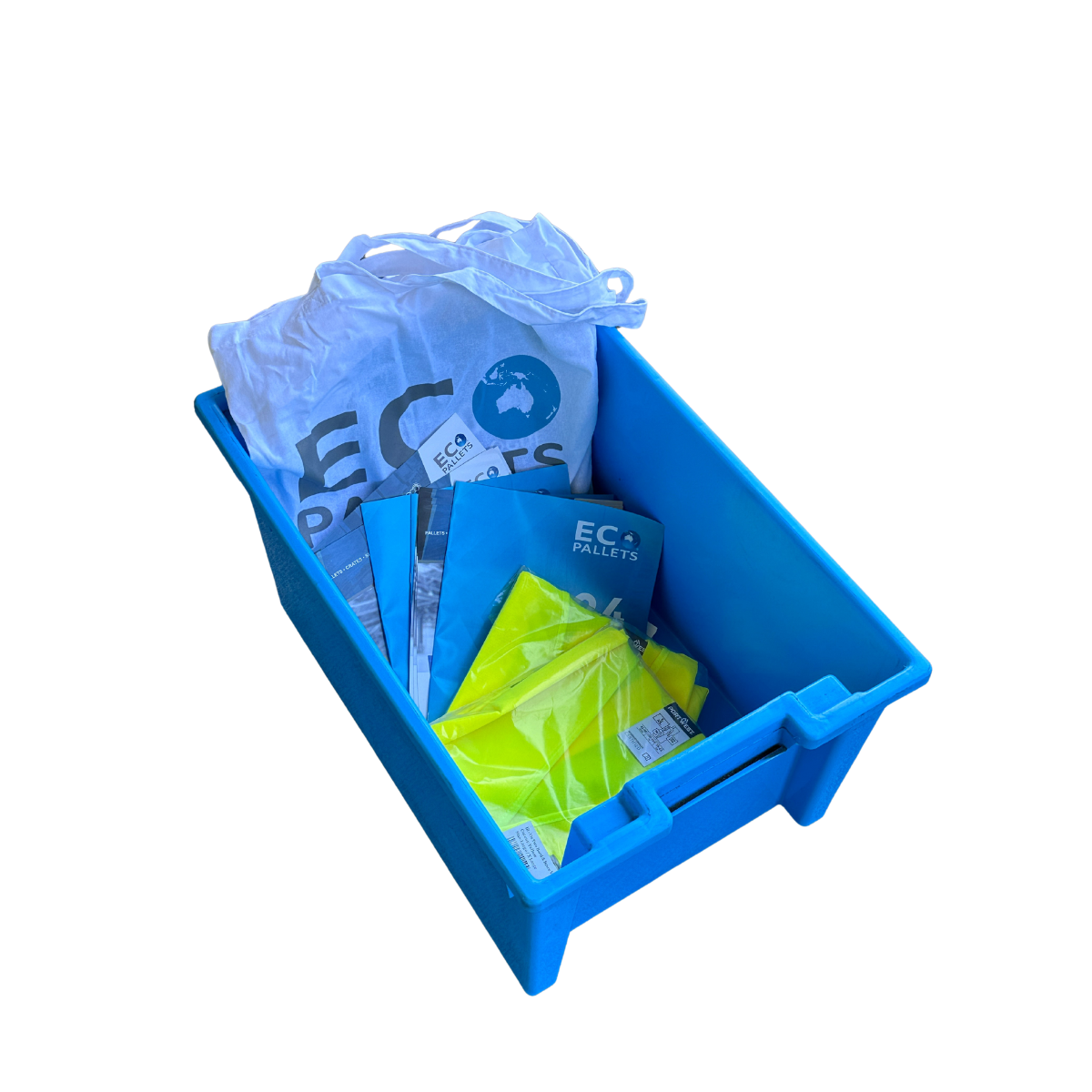
Nestable Parts Crate 39L
Volume: 39 L
Weight: 1.44 kg
Per pallet: 120
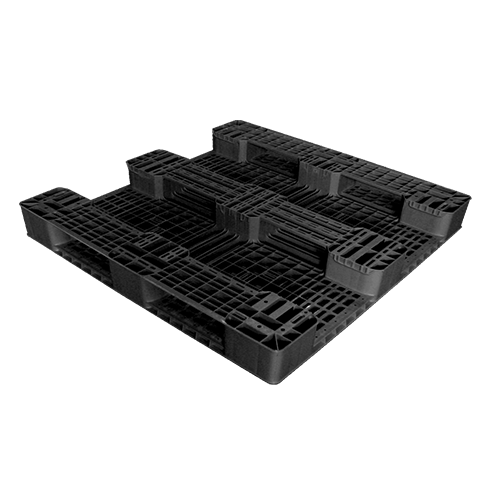
Medium Duty Plastic Pallet 1200 x 1100 mm
SWL: 1.0 t
Beam racking: 1,000 kg
Weight: 17 kg
Why Manufacturers Choose Swan MS
Built for Lines, Loops and Line-Side Work
Dimensional Consistency
Moulded to a repeatable size, unlike variable timber stock.
Ergonomic Bin Depths
440 mm and 580 mm options for hand-filled and line-side stations.
Published Load Ratings
Static, dynamic and racking figures on every product page.
5 Warehouse Locations
Local stock in every mainland capital for same-week dispatch.
FAQs
Manufacturing: Common Questions
Specifying Handling for Your Plant?
Tell us your line, your handling pattern and your delivery postcode. We reply within 24 hours with specification, stock at your nearest warehouse and freight.