
Harvest Bins and Produce Trays for Australian Growers
Vented bulk bins that let produce breathe, shallow trays that stop soft product bruising under its own stack, and pallets that will not rot in a packing shed or an open yard.
755 L
Vented Bin Volume
ISPM 15
Export Exempt
5
Warehouses
Stocked for Growers
Solid Wall Bins
5 lines
Produce Trays
3 lines
Shallow Bins
2 lines
Rackable Pallets
8 lines
Vented Bulk Bins
1 line
Airflow Is the Whole Point
Pack a bin with fresh produce and seal it, and the load at the centre sweats. Heat and moisture build where air cannot move, and what arrives at the packhouse is downgraded or spoiled. The vented Nally bin exists for that reason: open ventilation through the walls lets air circulate through the load rather than around it, which keeps produce in condition and lets damp material dry in storage.
It is the bin most Australian growers already picture when they ask for a bulk bin: a square, tapered, heavy-walled plastic container on the standard pallet footprint, in beige or cream. The light finish is not cosmetic either. Pale colours absorb less solar heat than dark ones, which keeps contents cooler when bins stand in sun at the end of a row.
Depth Bruises Soft Product
For anything graded and sold on appearance, depth is the enemy. Stack prawns, oysters or soft fruit deep and the product at the bottom is destroyed by the weight above it. The 15 litre tray is 98 mm deep for exactly that reason: product sits in a thin layer with little bearing down on it. It was built for the prawn industry and carries straight across to yabbies and marron, oysters, shellfish, horticulture and fruit and vegetables.
Working Depth on the Grading Line
Where people sort, grade or hand-pack directly out of a container for a full shift, wall height stops being a capacity question and becomes an ergonomics one. A 780 mm bin requires leaning in over the rim to reach the base. The 353L at 440 mm is roughly mid-thigh and genuinely workable all day, and the 528L at 580 mm sits between the two. Both occupy a full standard pallet footprint, so the capacity you give up is height, not floor efficiency.
Check the handling figures before specifying either. Both shallow bins carry high static ratings, at 5,000 kg block-stacked on a flat floor, but low dynamic and racking figures of 200 kg and 300 kg. They are built to sit and hold weight, not to be carried loaded on forks or stored at height. Where bins move loaded, the 600L rigid bulk crate at 1,000 kg dynamic is the right call.
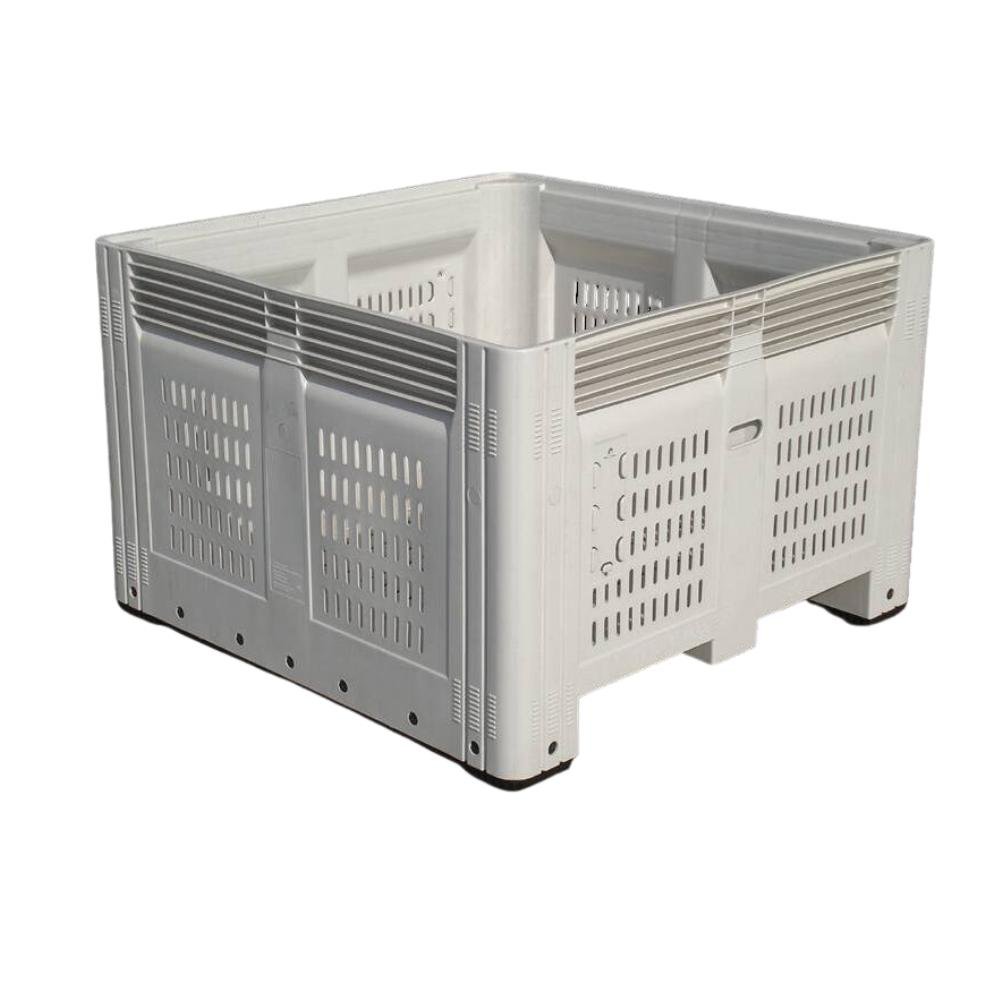
Vented Nally Bin 755L
Volume: 755 L
Weight: 42 kg
Walls: Vented
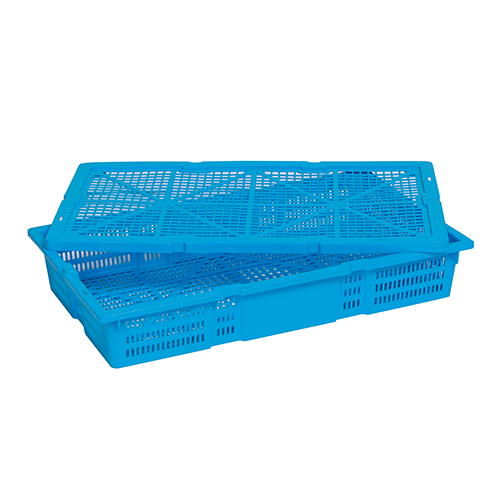
SWAN-Tote 1228H 15L
Depth: 98 mm
Weight: 0.6 kg
Per pallet: 128
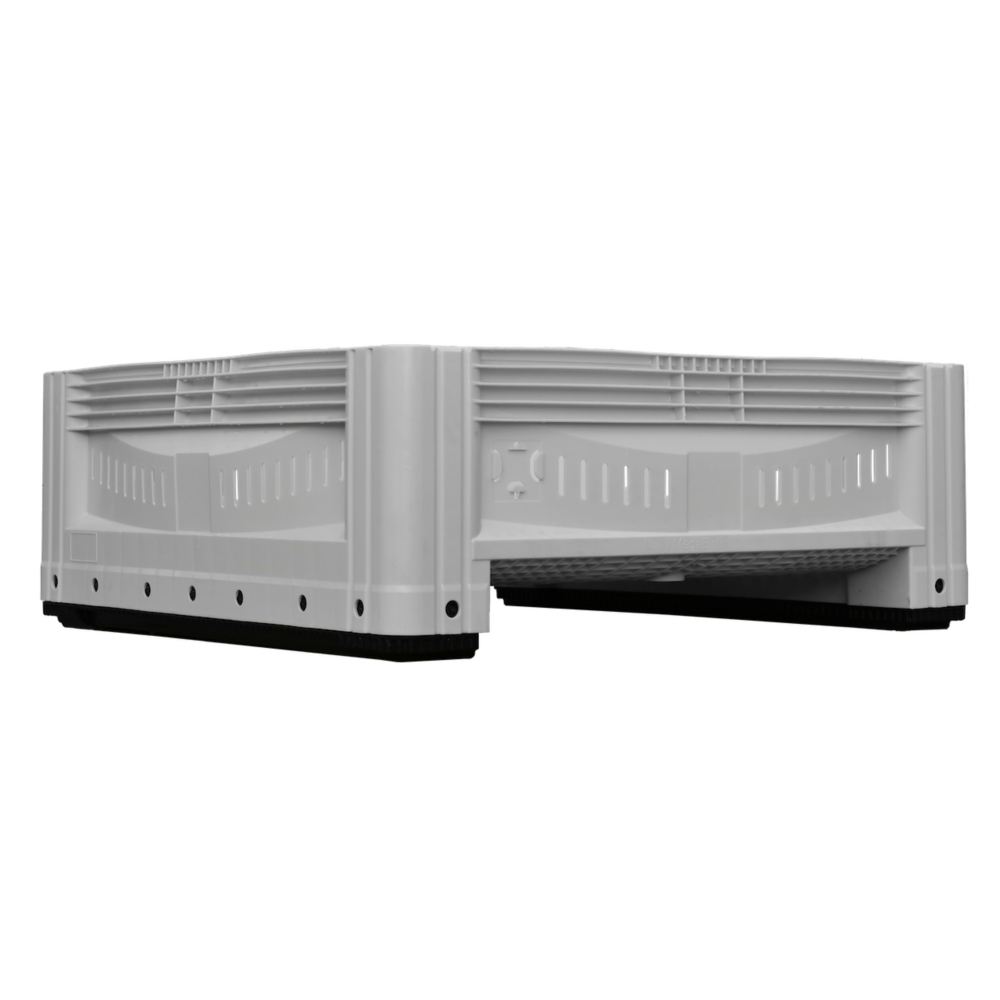
Rigid Bulk Bin 353L
Depth: 440 mm
Static: 5,000 kg
Weight: 27.5 kg
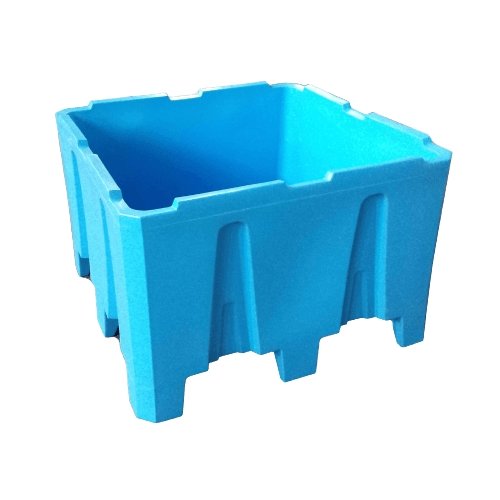
Rigid Bulk Bin 528L
Depth: 580 mm
Static: 5,000 kg
Weight: 30.5 kg
Why Growers Choose Swan MS
Built for Harvest, Packhouse and Transport
Ventilated for Produce
Airflow through the load prevents heat and moisture build-up.
Shallow Trays
98 mm depth protects soft, high-value product from crushing.
Weatherproof
No rot, swelling or pest carriage in sheds and open yards.
5 Warehouse Locations
Local stock in every mainland capital for same-week dispatch.
FAQs
Agriculture: Common Questions
Getting Ready for Harvest?
Tell us your crop, your volumes and your delivery point. We reply within 24 hours with specification, stock at your nearest warehouse and freight.